
In This Article
You did everything right. You read the hype, did the math, and bought the 15-pound blanket. Then you lay down, felt the weight settle across your chest, and your body quietly screamed, get this off me.

That reaction isn’t a character flaw. It’s a mismatch between the tool and the person.
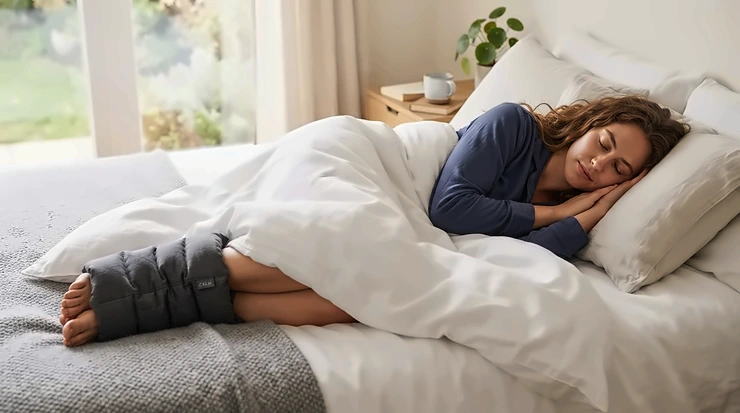
Weighted blanket alternatives for people who feel claustrophobic are smaller, lighter, or partial-coverage deep-pressure tools. They include lap pads, foot-only drapes, shoulder wraps, and oversized partial throws. They deliver the calming “held” sensation of a weighted blanket without pinning your torso, arms, or chest. You choose where the weight lands, and you can shrug it off in a second.
The idea behind all of this, deep pressure stimulation, has a long history. Wikipedia’s overview of weighted blankets traces it back decades and notes that the usual guideline is roughly 10% of body weight. That number is a starting point, not a commandment. It’s also where claustrophobic sleepers get into trouble.
Here’s the good news. For anxiety, you often don’t need full-body coverage. A well-placed few pounds on the lap or legs can do a surprising amount of work. Below, I break down seven real products, how they differ on paper, and who each one suits. I also cover how to build up your pressure tolerance without panic.
Prices throughout are ranges, not exact figures. Check current prices before you buy.
Quick Comparison: 7 Picks at a Glance
Before the deep dive, here’s the cheat sheet. Weights and sizes come from the product listings and third-party roundups. Listings change, so confirm details before you order.
| Product | Weight | Approx. Size | Role | Best For |
|---|---|---|---|---|
| YnM Portable Weighted Lap Blanket | 7 lb | 29×24 in | Classic lap pad | Desk-and-couch anxiety relief |
| Kivik Weighted Lap Pad | 2 lb | Small pad | Gentle starter | Low pressure tolerance |
| Kaisa Weighted Lap Blanket (bamboo viscose) | 7.5 lb | 40×50 in | Partial weighted throw | Spreading weight thin |
| L’AGRATY Cooling Weighted Lap Blanket | 5 lb | 29×24 in | Mid-weight, cooling | Hot sleepers |
| yescool Weighted Lap Pad | 2 lb | Small pad | Budget starter | First-time testers |
| BARMY Weighted Lap Blanket | 6 lb | 48×24 in | Long, narrow drape | Legs and feet only |
| MAXTID Sensory Weighted Shoulder Wrap | Roughly 2-4 lb (listings vary) | Wrap | Upper-body option | Open, no-pin coverage |
Notice the pattern. Nothing here weighs fifteen pounds, and nothing covers your whole body. That’s deliberate. Weight alone doesn’t make a blanket claustrophobic. Weight times coverage does, and most of these picks cut the second number sharply.
The Kaisa is the interesting outlier. It’s nearly as heavy as the YnM but spread across a much larger surface. On paper that means a far gentler squeeze per square inch, a point I’ll dig into later.
💬 Just one click — help others make better buying decisions too!😊
Top 7 Weighted Blanket Alternatives for People Who Feel Claustrophobic: Expert Analysis
A quick honesty note. I haven’t handled these products, and I’m not going to pretend otherwise. What follows is analysis built from listed specs and the sentiment that third-party roundups report. I couldn’t pull individual verified buyer reviews, so I flag where the evidence is thin.
1. YnM Portable Weighted Lap Blanket — the proven all-rounder
The YnM is the lap pad that shows up at the top of nearly every roundup. It’s a 7-pound pad, about 29×24 inches, built from microfiber with glass beads in 2×2 inch compartments.
Those small compartments matter. Smaller pockets keep beads from migrating into one lump, so the weight stays where you put it. That’s the difference between a calm hug and a lumpy sandbag.
At roughly 1.4 pounds per square foot (7 lb across about 4.8 sq ft), it’s concentrated enough to register, and small enough that it never touches your chest or arms.
Roundups consistently praise its soft fabric, quiet pockets, travel-friendly roll-up, and large review base. That volume of feedback makes it the safest “I just want one that works” bet.
Who is it for? Anyone who wants a weighted lap pad for anxiety at a desk, on a plane, or on the couch.
Pros:
- ✅ Small compartments keep beads from shifting
- ✅ Soft microfiber, machine washable
- ✅ Rolls up small for travel
Cons:
- ❌ 7 lb is a lot for small frames
- ❌ Too small to cover legs and feet together
Price range: typically under $50, so check current price. Verdict: strong value as a first purchase.

2. Kivik Weighted Lap Pad — gentlest on-ramp for sensitive bodies
The 2-pound Kivik is the “dip a toe in” option. Roundups cite a high average rating for it, around the 4.8 mark, though that’s an aggregated figure from review sites, not something I verified at the source.
Two pounds sounds trivial, and for some people it is. But if you’ve panicked under a heavy blanket, two pounds is a sensible place to learn what your body tolerates. It’s a true lightweight weighted option that lets you test before you invest.
On paper, a pad this light mostly delivers texture and gentle contact rather than strong compression. Think of it as a warm hand on the knee, not a bear hug. That’s exactly right for pressure tolerance training, which I cover below.
Kivik also sells a heavier 7-pound crystal velvet version with a travel bag, so you can graduate within the same brand.
Pros:
- ✅ Very gentle, ideal for low tolerance
- ✅ Highly rated in roundup summaries
- ✅ Heavier version exists for later upgrading
Cons:
- ❌ May feel too faint for real deep pressure
- ❌ Small footprint means limited coverage
Price range: budget tier, likely under $40. Verdict: the smartest starter for anxious squeezers.
3. Kaisa Weighted Lap Blanket — the partial weighted throw that spreads weight thin
The 7.5-pound Kaisa in bamboo viscose measures about 40×50 inches. That’s lap blanket and throw territory.
Here’s the arithmetic. Spread over roughly 14 square feet, 7.5 pounds works out to about half a pound per square foot. Compare that with the YnM‘s ~1.4. The Kaisa feels like a gentle drape rather than a compression garment. That makes it a natural partial weighted throw for people who dislike concentrated pressure.
Listings describe the bamboo-derived fabric as soft, breathable, and hypoallergenic. That helps with the overheating that often fuels the trapped feeling. Kaisa also makes a 5-pound crystal velvet version in a smaller size.
The trade-off is bulk. It isn’t a pocketable travel pad.
Pros:
- ✅ Large surface keeps pressure gentle
- ✅ Breathable bamboo viscose fabric
- ✅ Works as a throw on the couch
Cons:
- ❌ Bulkier than compact lap pads
- ❌ Costs more than basic small pads
Price range: mid-tier, perhaps $40-$70, so verify. Verdict: best for people who want coverage without cramping.
4. L’AGRATY Cooling Weighted Lap Blanket — mid-weight comfort that runs cooler
At 5 pounds and about 29×24 inches, the L’AGRATY sits between the featherweight pads and the 7-pounders. Its pitch is a cooling fabric, and that’s the real story here.
Heat is a quiet claustrophobia amplifier. When you start sweating under a blanket, your brain reads “trapped” faster. A cooling cover lowers that risk. At about 1 pound per square foot, the pressure is moderate and approachable.
Roundups list it as a value pick. I couldn’t verify a stable rating figure, so treat it as promising rather than proven.
Pros:
- ✅ Moderate 5 lb weight, easy to tolerate
- ✅ Cooling fabric reduces overheating
- ✅ Same compact footprint as the YnM
Cons:
- ❌ Thinner public review evidence
- ❌ Cooling claims vary by person
Price range: budget-friendly, probably under $45. Verdict: a smart middle rung on the ladder.
5. yescool Weighted Lap Pad — budget lightweight with a layered build
The yescool is another 2-pound option. It uses a seven-layer structure with glass beads, and roundups label it a budget pick with a rating near 4.7.
Its appeal is simplicity. A thin, light pad drapes across your thighs with almost no ceremony. If Kivik is your gentle starter, yescool is the cost-conscious twin.
The layered build is supposed to hold the beads steadily, though I’d treat that as a design claim, not a guarantee. Light pads like this are also commonly suggested for younger users, which tells you how mild the weight is.
Pros:
- ✅ Very light and easy to adjust to
- ✅ Budget-friendly entry point
- ✅ Layered build for even weight
Cons:
- ❌ May not feel “weighted” enough
- ❌ Limited to lap-sized coverage
Price range: low end, likely under $30. Verdict: ideal if you’re unsure weighted therapy works for you.

6. BARMY Weighted Lap Blanket — long and narrow for legs and feet
The BARMY is 6 pounds and about 48×24 inches, with a cotton inner blanket and a removable cover. That elongated shape is what makes it interesting. Spread over roughly 8 square feet, it comes to under a pound per square foot.
Folded lengthwise, it works as a weighted blanket for feet only, laid across shins and ankles like a bed scarf. A removable cover also means easy washing.
A caution on evidence. The listing I found showed a very high rating from a tiny pool of buyers, only a handful of reviews. That’s encouraging but far from conclusive, so lean on the specs rather than the stars.
Pros:
- ✅ Long shape suits legs and feet
- ✅ Removable washable cover
- ✅ Gentle 6 lb spread over large area
Cons:
- ❌ Very small review pool so far
- ❌ Too long to feel like a compact desk pad
Price range: roughly $25-$40, check current price. Verdict: a niche pick that fits the feet-only idea well.
7. MAXTID Sensory Weighted Shoulder Wrap — open-air pressure from above
The MAXTID wrap drapes across the shoulders and neck. Listings describe glass beads, a dual-texture fabric, and adjustable weight. Stated weights range from about 2 to 4 pounds depending on the version and retailer, so confirm which one you’re buying.
Why include a shoulder wrap in a list about claustrophobia? Because your arms, chest, and legs stay free. Nothing is tucked, pinned, or buried. For some people, pressure from above feels grounding. For others, anything near the neck is a hard no, so this one is personal.
Retail descriptions note it may feel cumbersome for people with significantly restricted movement. I couldn’t confirm a reliable rating, so evidence is light.
Pros:
- ✅ Leaves arms, chest, and legs free
- ✅ Adjustable weight in listings
- ✅ Easy to remove instantly
Cons:
- ❌ Neck contact bothers some people
- ❌ Specs vary across listings
Price range: budget to mid, roughly $25-$45. Verdict: a clever outside-the-box alternative if lap pads feel too low.
Price Range and Value Analysis
Here’s how the seven stack up when you view them side by side. Prices are approximate ranges, ratings come from third-party roundups or retailer listings, and “not verified” means I couldn’t confirm a figure.
| Product | Weight | Size | Price Range | Reported Rating | Best For |
|---|---|---|---|---|---|
| YnM Portable Weighted Lap Blanket | 7 lb | 29×24 in | Under $50 | About 4.6 (roundups) | All-round lap use |
| Kivik Weighted Lap Pad | 2 lb | Small | Under $40 | About 4.8 (roundups) | Sensitive beginners |
| Kaisa Weighted Lap Blanket | 7.5 lb | 40×50 in | $40-$70 | Not verified | Partial throw coverage |
| L’AGRATY Cooling Weighted Lap Blanket | 5 lb | 29×24 in | Under $45 | Not verified | Hot sleepers |
| yescool Weighted Lap Pad | 2 lb | Small | Under $30 | About 4.7 (roundups) | Tight budgets |
| BARMY Weighted Lap Blanket | 6 lb | 48×24 in | $25-$40 | Few ratings | Feet and legs |
| MAXTID Sensory Weighted Shoulder Wrap | 2-4 lb | Wrap | $25-$45 | Not verified | Open upper-body pressure |
Looking at the table, the yescool and Kivik deliver the cheapest way to learn your pressure tolerance, while the YnM offers the most proven track record per dollar. Anyone who hates concentrated squeezing should look hard at the Kaisa, because its larger surface spreads the same weight far more gently. The BARMY earns its slot only if feet and legs are your specific target.
Total cost matters too. A $30 pad that you actually use beats a $150 full-size blanket that ends up in a closet, and that’s the real ROI argument for starting small.

Transformation Guide #1: How to Build Pressure Tolerance Without Panic
Pressure tolerance isn’t fixed. Plenty of people who dislike heavy blankets are really reacting to too much, too fast, too enclosed. A slow ramp-up often changes the picture. Here’s a practical plan Amazon listings won’t hand you.
Week one: daytime only. Start with a 2-pound pad such as the Kivik or yescool across your thighs while you’re upright and awake. Ten minutes while reading is plenty. The goal is to pair weight with feeling safe, not to chase an effect.
Week two: add duration and a bit of weight. Move to 20-30 minutes. If you feel calm, try a 5-pound option like the L’AGRATY. If your chest tightens, drop back without guilt.
Week three: try the legs. Drape the BARMY or a folded YnM across your calves. Leaving your upper body free is the whole trick.
Week four: test a lie-down. Only now try a pad on the lower half of your body in bed, with an easy exit plan.
Two rules keep this safe and sane. First, you should always be able to remove the weight yourself in seconds. Second, one panicky session doesn’t mean failure. It means you moved up too fast.
Also notice what you’re actually reacting to. Is it weight, heat, or restricted movement? Each has a different fix, and many people discover heat is the culprit.
Transformation Guide #2: Real-World Scenarios
Spec sheets can’t tell you how a product fits a life. These three profiles show how the logic works.
The open-plan office worker. She feels anxious in afternoon meetings and hates anything bulky. A compact YnM across the lap under the desk gives her contact without drawing attention. If 7 pounds feels too intense, the 5-pound L’AGRATY is the logical step down. She uses it for short stretches, not all day.
The restless-evening binge-watcher. He sits for hours, gets fidgety, and overheats easily. The big, breathable Kaisa works as a partial weighted throw across the legs. Because it’s spread wide, nothing presses hard, and he can kick it off mid-episode.
The anxious sleeper with a trapped feeling. She tossed her full-size blanket after one night. She starts with the yescool daytime, then the BARMY across her shins in bed. Her arms and chest stay free, which is the whole point. After a few weeks she may add the Kivik across her lap on the couch, so her body links weight with winding down.
Notice the shared strategy. Nobody starts with maximum weight, and nobody gets covered from shoulders to toes.
Transformation Guide #3: Problem and Solution
Real life doesn’t match the product page. Here are the most common snags and fixes.
Problem: “I get hot and then I panic.” Choose a breathable or cooling cover, like the Kaisa bamboo viscose or the L’AGRATY, and keep it off your torso. Heat and claustrophobia feed each other.
Problem: “I can’t roll over.” If you feel stuck, the weight is too much for your position. Go lighter or shift to a leg-only drape such as the BARMY.
Problem: “The beads rustle.” Some weighted products make noise as beads move. Pads with small compartments, like the YnM, tend to quiet that down.
Problem: “It slides off.” Lap pads slip. Tuck the edges under your thighs on the couch, or use a long pad folded across your legs.
Problem: “I’m not sure it’s even working.” Fair question. Evidence is mixed, as I explain below. Give it a fair two-week trial, track your mood in a notes app, and then decide.
What Are Weighted Blanket Alternatives for People Who Feel Claustrophobic?
Weighted blanket alternatives for people who feel claustrophobic are lap pads, foot-only drapes, shoulder wraps, partial throws, and ultra-light weighted options. Each delivers deep pressure to a limited area. They give you the sensation of being held, minus the full-body enclosure that triggers a trapped feeling.
The category exists because the standard formula, 10% of your body weight, assumes you want the whole body wrapped. Many people don’t. Smaller formats keep a clear escape route, reduce overheating, and let you add pressure gradually.
There are also non-weighted routes. One claustrophobic reviewer at Homes & Gardens described preferring a plush, heavy-feeling throw over a true weighted blanket, an example that shows how personal this is. A soft, dense throw won’t deliver the same compression, but it can scratch the same cozy itch.
How to Choose Weighted Blanket Alternatives for People Who Feel Claustrophobic
Choosing well comes down to a handful of questions. Work through them in order.
- Decide where the weight should go. Lap, legs, feet, or shoulders. Pick one zone and start there. Smaller zones mean smaller risk.
- Start light. Many experts cite 10% of body weight for full blankets, as the Sleep Foundation’s weighted blanket guide explains, but a lap pad is not a full blanket. Roundups often cite 5-10% for lap pads, and you can go below that if you’re sensitive.
- Check the surface area. The same weight feels very different spread over 5 square feet versus 14. A larger surface equals gentler pressure.
- Prioritize breathable fabric. Cooling or bamboo-based covers lower the heat that fuels panic.
- Look for small compartments. Tight pockets keep weight even and quiet.
- Confirm it’s washable. A removable cover or machine-washable build keeps it fresh.
- Plan your exit. If you can’t lift it off easily in a second or two, it’s too much for you right now.
Weighted Lap Pad for Anxiety: What the Evidence and Reviewers Suggest
A weighted lap pad for anxiety is the most accessible entry point, and it’s the gentlest way to test deep pressure. So what does the research really say?
A systematic review in the American Journal of Occupational Therapy concluded that weighted blankets may be an appropriate therapeutic tool for reducing anxiety, but found the evidence base sparse and not enough to support claims about insomnia. Be careful reading that closely. Many of the studies used much heavier, full-size blankets for short periods, so direct proof for small lap pads is thin.
A newer narrative review published in 2026 describes the overall picture as inconclusive, with some studies showing reduced anxiety and others, especially those using objective physiological measures, failing to find clear effects.
My practical read is simple. The benefit seems real for many people and subjective for most. If a pad helps you feel settled, that’s a legitimate outcome, but don’t expect it to replace therapy or medication.
Among our picks, the YnM, Kivik, and yescool are the natural lap pad candidates. Reviewers repeatedly describe the desk-and-couch use case as their sweet spot.

Weighted Blanket for Feet Only: Does Partial Coverage Work?
A weighted blanket for feet only sounds odd, but it matches a real preference. Many people dislike weight on their toes and ankles, while others find lower-body pressure the most soothing and least confining.
The foot question cuts both ways. Some sleepers report that weight on the feet feels grounding. Others describe an unpleasant pinned-toe sensation, and commentary on foot sensitivity notes that weighted blankets can make that feeling worse. Some users also say to avoid weight on the feet if they have plantar fasciitis or calf problems, though that’s anecdotal, so ask a clinician if you have an actual condition.
If you want to test it, drape rather than tuck. Lay the BARMY loosely across your shins and let your toes breathe. A folded YnM works too. If your toes feel pushed downward, slip a small pillow under the pad.
Honestly, “feet only” works best as an experiment. Try it for a week and trust your body.
Partial Weighted Throw: The Middle Path
A partial weighted throw sits between a lap pad and a full blanket. It covers more area than a pad but isn’t built to tuck you in like a duvet.
The Kaisa is the clearest example in this list. Its 40×50 inch surface lets you cover your legs, or just drape it across your lap and one arm, with no sense of being sealed in. Because the weight is diluted across the fabric, the feeling is closer to a heavy cuddle than a squeeze.
This format helps most with the “I just want to feel cozy” crowd. It won’t feel dramatic. That’s the point.
One caveat: throws that aren’t evenly weighted can feel lumpy, so look for stitched compartments and check that the weight distribution is described in the listing.
Lightweight Weighted Option vs Traditional Heavy Blankets
Is a lightweight weighted option actually worth it, or is it just a wimpy version of the real thing? It depends on what you need.
| Feature | Lightweight Pads (2-5 lb) | Traditional Full Blanket (12-20 lb) |
|---|---|---|
| Pressure intensity | Mild, adjustable | Strong, full-body |
| Claustrophobia risk | Low | Higher for sensitive people |
| Heat | Minimal | Often significant |
| Portability | Excellent | Poor |
| Best For | Kivik, yescool, L’AGRATY users testing tolerance | People who already love heavy weight |
Looking at the table, the real trade-off is intensity versus control. A heavy blanket delivers a stronger, more uniform signal, but it demands you accept full-body enclosure. A lightweight pad gives you a weaker signal and a much easier exit. For someone who has already panicked under a heavy blanket, control wins.
One more nuance. A common claim is that anything below 10% of body weight loses the benefit. That’s unproven for lap pads, since the 10% rule was designed around full-size bed blankets. Some guidance even suggests going lighter if you feel restricted or trapped, which is exactly this situation.
Common Mistakes When Buying Weighted Blanket Alternatives for People Who Feel Claustrophobic
Skip these pitfalls and you’ll save money and stress.
- Buying by body-weight formula alone. The 10% rule is a guideline, and it breaks down for lap pads and sensitive people.
- Ignoring dimensions. A 7-pound pad and a 7-pound throw feel nothing alike. Always compare surface area.
- Forgetting heat. Warmth makes “trapped” feel worse. Pick breathable fabric.
- Trusting tiny review pools. A perfect score from a handful of buyers, like the BARMY listing I found, is a hint, not proof.
- Going heavy first. Start light and climb. It’s cheaper than returning a blanket you panicked under.
- Expecting a cure. These are comfort tools, not treatments.
Safety, Medical Cautions, and When to Skip Weighted Products
Weighted anything isn’t for everyone. The Cleveland Clinic’s sleep psychologist notes that effects vary from person to person, and that experts advise people with respiratory problems such as sleep apnea, diabetes, or severe heart conditions to avoid weighted blankets because the added pressure may be unsafe.
That caution applies most strongly to full-size blankets, but it’s a good reason to talk to a doctor before using any weighted product at night, particularly on your torso.
A few extra rules of thumb:
- Never use a weighted product on someone who can’t remove it independently.
- Keep weight off the chest and face if you have any breathing concerns.
- Stop if you feel numbness, tingling, shortness of breath, or rising panic.
- If anxiety or sleep trouble persists, see a clinician. A pad is a helper, not a substitute for care.
Lap pads, leg drapes, and shoulder wraps are generally lower-risk than full-body blankets, but “lower risk” isn’t “no risk.” Your doctor knows your body.
Long-Term Cost and Maintenance
Small weighted products are cheap to buy and cheap to keep, which is a hidden advantage. A machine-washable pad like the YnM can go through the laundry without drama, and the BARMY has a removable cover you can wash separately.
Follow the care tag. Wash on gentle, air-dry or tumble low, and avoid high heat that might damage glass beads or stitching. Spot-clean between washes.
Over a year, a $30-$50 pad that you use several times a week costs pennies per session. A bulky full-size blanket that you use twice and abandon costs a fortune per use. Starting small is also the smarter financial move.

FAQ
❓ Can a weighted blanket make claustrophobia worse?
❓ How heavy should a weighted lap pad be if I'm sensitive to pressure?
❓ Is a weighted blanket for feet only safe to use at night?
❓ Do weighted lap pads really help with anxiety?
❓ Is a partial weighted throw enough for deep pressure?
Conclusion
If a heavy blanket made you feel trapped, the answer isn’t to give up on deep pressure. It’s to shrink the footprint, lower the weight, and keep your exits open.
Here’s the short version. The YnM is the proven all-rounder for lap use, while the Kivik and yescool are gentle, low-cost ways to find your comfort zone. The L’AGRATY adds a cooler mid-weight rung, and the Kaisa works as a roomy, low-pressure partial weighted throw. The BARMY suits legs and feet, and the MAXTID wrap offers open-air pressure on the shoulders for those who like it above rather than below.
Remember the big caveats. Evidence for weighted products is mixed, small pads haven’t been studied as thoroughly as full blankets, and this guide relies on specs and aggregated sentiment rather than hands-on testing. Move gradually, track how you feel, and talk to a clinician if anxiety or sleep problems persist.
✨ Ready to find a calmer way to feel held? 🔍 Click any bolded product above to check current pricing and availability, and start with the lightest option that feels right. Your nervous system will tell you when you’ve found it. 💛
Recommended for You
- Glass Bead vs Plastic Pellet Weighted Blanket: 7 Best Picks 2026
- Weighted Blanket for Autism in Teens: 7 Top Safe Picks 2026
- Weighted Blanket for Restless Leg Syndrome: 7 Best Picks 2026
Disclaimer: This article contains affiliate links. As an Amazon Associate, I earn from qualifying purchases. If you purchase products through these links, we may earn a small commission at no additional cost to you.
✨ Found this helpful? Share it with your friends! 💬🤗
