
In This Article
A weighted blanket for restless leg syndrome is a heavy, evenly filled blanket, usually 10 to 25 pounds, that rests gentle, steady pressure across your legs and body at night. It can’t treat the condition, but many people use it as a calming, drug-free layer in a wider sleep routine.

Picture the scene. The lights are off, the house is quiet, and your legs decide it’s showtime. Crawling, tugging, aching, and an urge to move that won’t take no for an answer. According to the National Institute of Neurological Disorders and Stroke, RLS is a neurological condition that triggers an irresistible urge to move the legs, and symptoms typically ramp up in the evening and at rest. That is exactly when you’re trying to sleep.
So why would a weighted blanket for restless leg syndrome be worth a look? Mostly because the pressure feels grounding for some people, and the risk is low if you pick the right weight. Here’s the honest part, though. I found no large, RLS-specific trial proving weighted blankets work. The evidence comes from related sleep research, and I’ll tell you exactly where it’s strong and where it’s thin.
This guide ranks seven real blankets across budget, mid-range, and premium tiers. It then covers weight, construction, safety, and how to use one well. Read it like a friend who has done the homework, because the shopping is the easy part and the choosing is where people go wrong.
Quick Comparison: Best Weighted Blankets for Restless Leg Syndrome
| Product | Weights Offered | Build | Price Range | Best For |
|---|---|---|---|---|
| YnM Weighted Blanket | Many weights and sizes | Glass beads, 7-layer, 2×2 in. compartments | Under $50 for common sizes | First-timers on a budget |
| Cottonblue Weighted Lap Blanket | 7 lb (41×60 in.) | Crystal velvet cover | Budget tier, check current price | Legs-only coverage |
| Quility Premium Weighted Blanket | 7 to 30 lb | 7-layer, cotton insert, removable minky cover | Roughly $40-$100 by size | Easy-wash cover fans |
| Layla Weighted Blanket | 15, 20, 25 lb | Glass microbeads, flippable cotton/minky | Roughly $120-$220 | Side sleepers, cool bedrooms |
| Degrees of Comfort Weighted Blanket | 10 weight options | Glass bead pockets, two covers | Mid-range, check current price | Fine-tuning the weight |
| Gravity Weighted Blanket | 15, 20, 35 lb | Cotton shell, glass beads, grid stitching | Around $200-$300 | Solo sleepers wanting premium |
| Bearaby Cotton Napper | 10, 15, 20, 25 lb | Knit, no loose fill | Roughly $250-$300 | Hot sleepers |
The table shows a clear split. The budget picks (YnM Weighted Blanket, Cottonblue Weighted Lap Blanket, Quility Premium Weighted Blanket) win on flexibility and cost. The two premium picks (Gravity Weighted Blanket, Bearaby Cotton Napper) charge for materials and design. If you run hot, the Bearaby Cotton Napper is the standout. If you’re still testing whether pressure helps at all, start with the YnM Weighted Blanket.
💬 Just one click — help others make better buying decisions too!😊
Top 7 Weighted Blanket for Restless Leg Syndrome Picks: Expert Analysis
1. YnM Weighted Blanket — smallest compartments for the money
The grid is the story here. The YnM Weighted Blanket uses a seven-layer build with glass beads locked into 2×2-inch compartments, which is tighter than the 5×5-inch grids on many rivals.
Why does that matter for your legs? Smaller pockets mean less bead migration, so the pressure stays where you put it, even when you thrash around. The popular 15 lb, 48×72-inch size suits adults around 140-150 lb under the standard 10% guideline. The listing also includes 16 duvet loops, so a cover keeps it from wandering.
Based on the spec comparison, this is the most sensible test drive for a weighted blanket for restless leg syndrome. It’s cheap enough that a wrong weight guess doesn’t sting. Reviewers consistently praise the even feel and the value. Common complaints are that 15 lb feels heavy to some sleepers, that the duvet cover is sold separately, and that heavier sizes are awkward to wash.
Pros:
- ✅ Tiny 2×2 compartments hold weight in place
- ✅ Glass beads feel quieter than plastic pellets
- ✅ Huge range of sizes and weights
Cons:
- ❌ Cover is sold separately
- ❌ Heavier sizes are hard to wash
Price range: typically under $50 for common sizes, so check current price. Verdict: the best value entry point on this list.
2. Cottonblue Weighted Lap Blanket — gentle pressure aimed at the legs
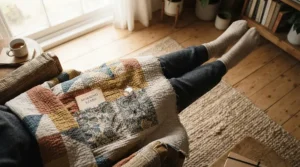
Not everyone wants a full-body weighted blanket. The Cottonblue Weighted Lap Blanket is a 7 lb, 41×60-inch lap pad with a crystal velvet cover, built to sit across the lower body.
Here’s what the spec sheet won’t tell you. Seven pounds spread over that area is a lighter touch than a 15 lb full blanket, and that’s the point. It works for people who feel trapped under heavy weight or who only notice symptoms from the waist down. It’s also portable enough for the couch, which matters because RLS can flare during evening TV time, not only in bed.
I couldn’t verify enough independent review data on this specific listing to summarize reviewer sentiment, so treat it as a low-cost experiment rather than a proven fix. Weighted lap pads as a category are widely used for calm and focus, but that’s not RLS evidence.
Think of it as an add-on. Pair it with a lighter bed layer, and the Cottonblue Weighted Lap Blanket gives you a leg-focused option without committing to a heavy full-body blanket.
Pros:
- ✅ Lighter, easier-to-escape weight for beginners
- ✅ Portable for couch and recliner use
- ✅ Small footprint fits any bed size
Cons:
- ❌ Covers legs only, not the full body
- ❌ Limited verifiable independent review data
Price range: budget tier, so check current price. Verdict: a low-risk leg-targeting experiment.
3. Quility Premium Weighted Blanket — removable cover, easy cleaning
Laundry day is where many weighted blankets fail. The Quility Premium Weighted Blanket solves it with a removable, machine-washable minky cover over a cotton-exterior insert with polyester padding and a seven-layer build.
Weights run from 7 lb up through 30 lb, so you can fine-tune toward your body weight. The cover matters more for RLS than you’d think. If sweat or skin sensitivity is part of your nighttime misery, a cover you can wash weekly beats a blanket that needs spot cleaning.
My take, based on the specs: this is the practical pick for people who want a bed-ready system. The trade-off is heat. Testers note the multi-layer construction and plush cover can run warm, and hot sleepers often remove the cover or buy a cooler one. The insert itself is hand-wash or spot-clean only.
Reviewers frequently describe the weight distribution as even and the cover as cozy, while warmth is the most common caution.
Pros:
- ✅ Machine-washable removable cover
- ✅ Wide weight range from 7 to 30 lb
- ✅ Soft, cozy feel for cool rooms
Cons:
- ❌ Can trap heat for hot sleepers
- ❌ Insert needs hand washing
Price range: roughly $40-$100 depending on size and weight. Verdict: a solid, practical value pick.
4. Layla Weighted Blanket — two textures in one blanket
Flip it over and you get a different blanket. The Layla Weighted Blanket has a smooth 300-thread-count cotton side and a plush minky side, with glass microbeads held in hexagon quilting.
It comes in three weights, 15 lb (twin, 48×72), 20 lb (queen, 60×80), and 25 lb (king). That’s the catch. Weight is tied to size, so lighter sleepers who want a bigger blanket may get more weight than they need. If you’re between weights, the usual advice is to go heavier, but only if you can easily push it off.
Where it shines is flexibility across seasons. Use the cotton side when the room is warm and the minky side when it’s cold. Reviewers generally like the feel and washability, and the most repeated complaints are that it runs warm and that three weights leave smaller sleepers short on choices.
For a weighted blanket for restless legs at night, the reversible design helps, because comfort tends to change as symptoms and room temperature shift.
Pros:
- ✅ Flippable cotton and minky sides
- ✅ Hexagon quilting keeps beads in place
- ✅ Machine washable (larger sizes may need a laundromat)
Cons:
- ❌ Only three weight options
- ❌ Runs warm for many sleepers
Price range: roughly $120-$220, depending on promotions. Verdict: a strong mid-range all-rounder.
5. Degrees of Comfort Weighted Blanket — ten weights, two covers
Choice is the selling point. The Degrees of Comfort Weighted Blanket comes with two covers, a plush one for cold weather and a lighter one for warm, and offers about ten weight options.
That second number is the big deal. Most brands give you three or four weights, which forces guesswork. With ten, you can land closer to your target, say, 12 lb instead of 15, which matters if you’re petite or sensitive to pressure. The beads sit in small pockets, which supports even blanket weight distribution across the surface.
My analysis: this is the best option for the person who has already learned that a standard 15 lb blanket is “almost right.” Medical News Today’s roundup flags a limited color range as the main drawback. I couldn’t verify a deep pool of independent user reviews, so lean on the return policy rather than anyone’s star rating.
If you want the closest thing to a custom fit among mainstream blankets, start here.
Pros:
- ✅ Around ten weight choices
- ✅ Includes warm and cool covers
- ✅ Small pockets hold glass beads evenly
Cons:
- ❌ Limited color range
- ❌ Less independent review data available
Price range: mid-range tier, so check current price. Verdict: best for precise weight matching.

6. Gravity Weighted Blanket — the original premium glass-bead blanket
This is the one that started the craze. The Gravity Weighted Blanket has a cotton inner shell filled with fine glass beads and polyester batting, gridded stitching, and a removable micro-fleece cover.
Weights are 15, 20, and 35 lb, with a 48×72-inch single and a 90×90-inch queen/king. That 35 lb version is for couples sharing a large bed, not for a solo sleeper’s legs. The grid keeps the fill spread out, and one lab-style review reported no shifting, though another source noted beads can migrate over time. Treat shifting as a long-term maintenance risk.
The practical headache is cleaning. The cover is machine washable, but the inner blanket is spot-clean only. Warmth is also a recurring theme, with a retailer review summary showing roughly one in five reviews calling it too warm.
If you sleep cold, like a cozy hug, and don’t mind the price, the Gravity Weighted Blanket is a polished choice. Hot sleepers should look at the brand’s separate cooling version instead.
Pros:
- ✅ Premium feel and tidy grid stitching
- ✅ Cotton shell with glass beads
- ✅ Removable washable cover
Cons:
- ❌ Inner blanket is spot-clean only
- ❌ Often described as warm
Price range: around $200-$300. Verdict: pricey, but a refined option for cool sleepers.
7. Bearaby Cotton Napper — knit weight, no loose fill
Forget beads entirely. The Bearaby Cotton Napper is a hand-knit blanket of 95% organic cotton and 5% spandex, where the weight comes from the bulk of the yarn itself.
Weights are 10, 15, 20, and 25 lb in single-person sizes (roughly 40×64 up to 48×72 inches). Because nothing is loose inside, there’s no bead migration, and the open knit lets heat escape, which is why it’s the standout pick for hot sleepers. It’s also machine washable, a rarity at this weight.
Now the honest trade-offs. Reviewers love the breathability and the look, but several describe it as less snuggly than bead-filled blankets, it isn’t designed for sharing, and the price is steep. One review suggests it suits body weights from about 100 to 250 lb.
If overheating is what ruins your nights, the Bearaby Cotton Napper is the most logical weighted blanket for restless leg syndrome here.
Pros:
- ✅ Open knit stays cooler than bead blankets
- ✅ No fill to shift or leak
- ✅ Machine washable
Cons:
- ❌ Expensive for a single-person blanket
- ❌ Less cozy and not built for couples
Price range: roughly $250-$300. Verdict: premium and cooling, with a price to match.
Blanket Weight Distribution: How Each Construction Compares
Blanket weight distribution is the quiet factor that separates a calming blanket from a lumpy one. If beads pool at the foot of the bed, your legs lose the pressure you paid for.
| Product | Weight Mechanism | Shift Risk | Cover / Washing | Best For |
|---|---|---|---|---|
| YnM Weighted Blanket | 2×2 in. grid, glass beads | Low | Washable, heavy sizes awkward | Even pressure on a budget |
| Cottonblue Weighted Lap Blanket | Crystal velvet cover, check listing | Check listing | Check listing | Legs-only use |
| Quility Premium Weighted Blanket | 7-layer padded insert | Low to moderate | Cover machine washable | Easy cleaning |
| Layla Weighted Blanket | Hexagon quilting, microbeads | Low | Machine washable | Flipping textures |
| Degrees of Comfort Weighted Blanket | Small pockets, glass beads | Low | Two covers included | Custom weight |
| Gravity Weighted Blanket | Grid stitching, glass beads | Low, some report drift | Insert spot-clean only | Premium cool sleepers |
| Bearaby Cotton Napper | Knit bulk, no fill | None | Machine washable | Hot sleepers |
Reading the table, the knit design wins on durability because there’s nothing to move. Among bead blankets, smaller compartments are the safer bet for restless sleepers who toss and kick. The real-world takeaway is simple: if you move a lot at night, favor tight grids or knit construction and fold the blanket in half when washing to avoid stressing the seams.

How Deep Pressure Stimulation Works (And What the Research Does Show)
Deep pressure stimulation is firm, even touch spread over large areas of the body, the same idea behind a long hug or a heavy coat. Researchers think it nudges the nervous system toward a calmer state, with more parasympathetic activity and less sympathetic arousal.
The best-known evidence comes from a randomized trial reported by the American Academy of Sleep Medicine. It followed 120 adults with insomnia and psychiatric conditions for four weeks. Remission was 42.2% in the weighted blanket group versus 3.6% in controls. A separate randomized trial in BMC Psychiatry, with 102 adults with insomnia, found a larger improvement in sleep quality scores with a weighted blanket than with a normal one.
Here’s the catch. Neither study was about restless legs, and placebo effects are possible. Another trial in autistic children found kids preferred the weighted blanket even though measured sleep didn’t improve.
So what’s a reasonable reading? Based on the evidence, the mechanism is plausible for anyone whose sleep suffers from arousal and tension, and RLS often comes with both. But a weighted blanket for restless leg syndrome remains a comfort strategy, not a proven treatment. The NINDS notes that things like warm baths, massage, and heating pads or ice packs help some people, which is a reminder that non-drug tactics matter.
How to Choose a Weighted Blanket for Restless Leg Syndrome
Follow these seven steps and you’ll avoid the expensive mistakes.
- Start near 10% of your body weight. The Sleep Foundation uses 10% as a rule of thumb, with many people comfortable between roughly 5% and 12%.
- Check the grid. Smaller compartments mean steadier blanket weight distribution.
- Match fabric to your thermostat. Knits and cooling covers suit hot sleepers, and minky suits cold rooms.
- Plan for laundry. A removable cover saves you from hauling a wet 20 lb insert.
- Size for your body, not your bed. Feet-to-chin coverage is enough, and an oversized blanket can hang off the bed and drag.
- Do the push-off test. If you can’t easily shove it off with your arms and legs, go lighter.
- Use the trial period. Give it a couple of weeks before judging, then return it if it flops.
Pick the lighter option when torn. A blanket that feels like a hug beats one that feels like a stack of textbooks, especially if your restlessness already makes you want to bolt.
✨ Ready to Find Your Fit?
🔍 Use the weight guide above, compare the construction notes, and click any highlighted product to check current pricing and availability. Small decisions on weight and fabric make a big difference in how your nights feel!
Weighted Blanket for Restless Legs at Night: A Realistic Evening Routine
A weighted blanket for restless legs at night works best as one step in a routine, not a magic switch. Here’s a practical sequence you can start tonight.
An hour before bed: Take a warm bath or shower and do gentle calf and hamstring stretches. These are classic self-care tactics for mild RLS, and they set a calmer baseline.
At lights-out: Lay the blanket from the thighs downward first, then pull it up to your chest. Starting at the legs means you feel the pressure where the sensations show up.
First 30 days:
- Begin with a lighter weight than you think you need.
- Expect an adjustment period of several nights. Weight can feel odd at first.
- Keep the room slightly cooler than usual to offset heat.
Maintenance: Wash covers regularly, spot-clean inserts per the care label, and check seams every few months for leaks or thin patches. Skip heavy washes if the care tag says hand wash only.
The most common mistake is giving up after one night. The second most common is buying too heavy, getting claustrophobic, and blaming the idea instead of the weight.
Leg Weighted Blanket for Restless Sleep: Targeting Pressure Where It Counts
If symptoms live below the waist, a leg weighted blanket for restless sleep can feel more relevant than a full-body model. The idea is concentrating coverage on your thighs, shins, and feet.
You have three practical ways to do it. First, use a full-size blanket folded over the legs, which is free and flexible. Second, use a lap pad such as the Cottonblue Weighted Lap Blanket on top of your regular bedding. Third, combine a lighter full-body blanket like the Degrees of Comfort Weighted Blanket with a leg pad for layered pressure.
Some cautions apply. Avoid heavy weight pinned across your ankles or knees, which can irritate joints. If you have circulation problems, talk to your doctor first. And remember that a leg weighted blanket for restless sleep still has to be easy to move, so keep the weight modest.
Based on the spec comparison, a 5-10 lb leg-focused layer is a sensible starting range for most adults. Think of it as a gentle weight, not a clamp.
Sleep Onset Latency: What to Track and What to Expect
Sleep onset latency is simply how long it takes you to fall asleep. For many people with RLS, that number balloons, because the urge to move shows up exactly when you’re lying still.
Research on weighted blankets offers hints rather than guarantees. In a 2015 study of 31 adults with chronic insomnia, participants slept longer, woke less, and said it was easier to settle down while using a weighted blanket. Other studies show mixed or placebo-prone results, so you shouldn’t expect a miracle.
Here’s a simple way to find out for yourself:
- Week 1: Track your usual routine. Note how long you think it takes to fall asleep, and how many times you get up.
- Week 2-3: Add the blanket and change nothing else.
- Compare: Look at average sleep onset latency and how rested you feel.
If sleep onset latency doesn’t budge after three weeks, adjust the weight or try a different fabric before abandoning the approach. And if nights stay rough, that’s a conversation for a clinician, not a reason to keep buying blankets.

Weighted Blanket for Restless Leg Syndrome vs Alternatives
A weighted blanket for restless leg syndrome is one tool among several, and it works best alongside others.
| Option | What It Does | Strength | Limit | Best For |
|---|---|---|---|---|
| Weighted blanket (any pick above) | Steady, spread-out pressure | Calming, no medication | Not proven for RLS | Evening wind-down |
| Standard comforter | Warmth only | Cheap and familiar | No pressure effect | Mild symptoms |
| Warm bath or heating pad | Heat relaxes muscles | Quick, helps some | Temporary | Pre-bed routine |
| Compression or foot wrap | Targeted pressure | Focused on feet and legs | Needs a proper fit | Leg-centered symptoms |
| Medical treatment | Doctor-guided options | Addresses causes | Requires a clinician | Moderate to severe RLS |
Looking at the comparison, a weighted blanket sits between a plain comforter and a clinical approach. It adds something a comforter can’t, which is pressure, without the side effects of drug options. But it doesn’t replace medical care, and if symptoms are frequent or severe, a doctor can check for contributors like iron levels or medications that may worsen RLS.
Real-World Scenarios: Matching the Blanket to the Sleeper
These three hypothetical profiles show how the reasoning plays out.
Scenario 1: The hot sleeper on a tight schedule. Imagine a 170 lb adult in a warm apartment, using the blanket nightly. A knit blanket like the Bearaby Cotton Napper (15-20 lb) makes sense despite the price, because heat is the likely deal-breaker. Budget alternative: the YnM Weighted Blanket with the thinnest cover.
Scenario 2: The cold-room side sleeper on a budget. Picture a 140 lb person under $100. The YnM Weighted Blanket at 15 lb, or the Quility Premium Weighted Blanket at 12-15 lb with its cozy removable cover, fits. The cover can also go in the wash weekly.
Scenario 3: The pressure-sensitive beginner. Think of a 125 lb person who dislikes heavy weight. The Degrees of Comfort Weighted Blanket at 10-12 lb, plus a Cottonblue Weighted Lap Blanket for the couch, gives gentle, adjustable coverage.
In each case, the logic is the same. Match the blanket to temperature first, body weight second, and budget third. Frequency of use matters too, since nightly use justifies a better build.
Problem → Solution Guide for Common Weighted Blanket Headaches
Problem 1: “I’m sweating.” Swap to a breathable cover, drop to a lighter weight, or consider a knit like the Bearaby Cotton Napper. Layer lighter sheets underneath.
Problem 2: “It feels too heavy.” Move down 2-5 lb. If you can’t push it off easily, it’s too much. A lap pad such as the Cottonblue Weighted Lap Blanket is a gentler alternative.
Problem 3: “My legs still twitch.” That’s normal for a comfort tool. Pair the blanket with proven self-care, such as stretching and warm baths, outlined by Harvard Health for mild RLS. If symptoms persist, see a clinician.
Problem 4: “The beads are drifting.” Fold the blanket and redistribute them, use duvet loops with a cover, and favor tight-grid designs like the YnM Weighted Blanket or the Gravity Weighted Blanket.
Safety Guide: Who Should Check With a Doctor First
Weighted blankets are generally low-risk, but they aren’t for everyone. The Sleep Foundation advises that people with sleep apnea or other sleep-related breathing problems should talk to a doctor before using one.
Other groups need caution:
- Children: Generally considered safe only for kids aged three and up who weigh at least 50 lb, and the 10% rule needs care with small bodies.
- Anyone who can’t easily remove the blanket: If you can’t push it off, don’t use it.
- People with circulation issues, low blood pressure, or claustrophobia: Ask your doctor.
- Pregnancy: RLS is common during pregnancy, so check with your OB or midwife before adding heavy weight.
Also, tell your clinician if RLS is new or worsening. The NINDS notes that certain medications, including some antihistamines and antidepressants, can aggravate symptoms. This article is general information, not medical advice.
Long-Term Cost & Maintenance: What You Really Pay
A blanket’s price is only half the story. Lifespan and care decide the true cost per night.
| Tier | Example | Price Range | Cost Over 1 Year (per night) | Care |
|---|---|---|---|---|
| Budget | YnM Weighted Blanket | Under $50 | Roughly 10-14 cents | Gentle wash |
| Budget-mid | Quility Premium Weighted Blanket | Roughly $40-$100 | Roughly 11-27 cents | Cover washable |
| Mid-range | Layla Weighted Blanket | Roughly $120-$220 | Roughly 33-60 cents | Machine washable |
| Premium | Bearaby Cotton Napper | Roughly $250-$300 | Roughly 68-82 cents | Machine washable |
These per-night figures are simple estimates, so spread the cost over two or three years and they fall quickly. Looking at value, a premium blanket only pays off if you’ll use it nightly and it solves a real problem like overheating. If you’re unsure whether pressure helps at all, start cheap and upgrade later.
Maintenance matters too. Washing covers regularly, following care labels, and storing the blanket flat protect the seams and keep beads from stressing one corner.

FAQ
❓ Can a weighted blanket make restless legs worse?
❓ Is 15 lb or 20 lb better for nighttime leg symptoms?
❓ Do I need a separate weighted blanket for legs?
❓ Is it safe to use a weighted blanket while pregnant with RLS?
❓ How long before I notice whether a weighted blanket helps?
Conclusion
A weighted blanket for restless leg syndrome isn’t a cure, and anyone who tells you otherwise is selling something. It’s a plausible, low-risk way to add steady, calming pressure to your evenings, backed by real sleep research on weighted blankets generally, but without strong RLS-specific proof.
Pick by temperature first. If you run hot, the Bearaby Cotton Napper is the logical premium choice, while the YnM Weighted Blanket is the best low-cost test. The Quility Premium Weighted Blanket and Layla Weighted Blanket cover easy cleaning and flexible textures, the Degrees of Comfort Weighted Blanket helps if you need precise weight, and the Gravity Weighted Blanket suits cool sleepers who want a refined feel. For leg-only pressure, the Cottonblue Weighted Lap Blanket is a gentle add-on.
Keep the weight near 10% of your body weight, mind the safety notes, and track your sleep for a few weeks. Pair it with stretching, warm baths, and a chat with your doctor if symptoms stay stubborn.
Recommended for You
- Glass Bead vs Plastic Pellet Weighted Blanket: 7 Best Picks 2026
- Weighted Blanket Alternatives for People Who Feel Claustrophobic 2026
- Weighted Blanket for Autism in Teens: 7 Top Safe Picks 2026
Disclaimer: This article contains affiliate links. As an Amazon Associate, I earn from qualifying purchases. If you purchase products through these links, we may earn a small commission at no additional cost to you.
✨ Found this helpful? Share it with your friends! 💬🤗
